
Shopping Cart
There are no more items in your cartHow to Optimize Your Commercial Kitchen for the Busy Season

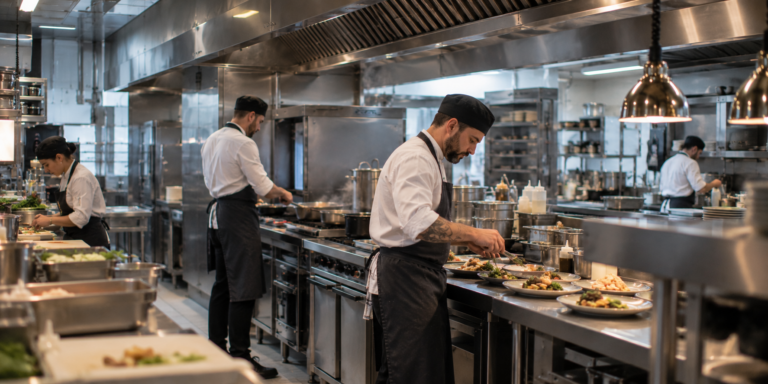
Peak periods—whether in the summer, at Christmas, or during any other time of high demand—subject the kitchen to a much faster pace than usual. More diners, longer shifts, and less room for error mean that everything must run with precision: cleanliness, equipment, and staff organization. When any of these three pillars fails, the effect is immediately felt in the service. In this article, we’ll review how to prepare your professional kitchen to handle the high season without letting the pressure of volume compromise quality or
food safety.
Why the peak season requires specific preparation
An increase in the number of diners doesn’t just mean cooking larger quantities—it also means cooking faster, preserving food more effectively, and maintaining hygiene standards despite much more intensive use of the facilities. Bottlenecks that go unnoticed during the off-season—such as a slow machine, a poorly laid-out work area, or a vague cleaning protocol—can lead to delays, waste, or food safety incidents during peak season. That’s why preparation must be approached in advance and in a comprehensive manner—not as a last-minute reaction.
Enhance professional kitchen cleaning
Higher service volume leads to an increase in the buildup of grease, moisture, and debris, which raises the risk of contamination if standard protocols are not followed. Here are some key tips for effective cleaning during peak season at
:
- Increase the frequency of cleaning in high-traffic areas: range hoods, stovetops, filters, and surfaces that come into direct contact with food.
- Use the right product for each area. A degreaser does not serve the same purpose as a fruit and vegetable sanitizer or a product specifically designed for dishwashers; using the right product prevents you from having to repeat tasks and ensures the best results from the very first use.
- Prioritize products certified for food contact on all surfaces that come into contact
with food. - Don’t forget appliances, kitchen utensils, floors, and drains. Each item requires its own process: ovens and fryers must be inspected according to the manufacturer’s instructions; utensils must be washed and disinfected with food-safe solutions; and floors near stoves or sinks require specific products to prevent slips and eliminate odors.
- Create a cleaning plan that includes daily, weekly, and monthly tasks. Having clear, written protocols makes it easier for the entire team—including seasonal staff—to maintain the same standard.
There are also eco-friendly cleaning alternatives that deliver results comparable to those of conventional products, while also minimizing the business’s environmental impact.
Equip yourself with high-performance machinery
Cleanliness ensures safety; machinery ensures responsiveness. During peak season, having equipment ready to operate continuously makes the difference between keeping up with demand and creating bottlenecks.
Industrial Ovens An oven with multiple trays, various cooking modes, and uniform heat distribution
allows you to cook larger volumes in less time without compromising the final result. It is
one of the central pieces of equipment in kitchens with high baking or cooking volumes.
blast chillers These devices allow you to cool freshly cooked food quickly and safely, reducing the risk
of bacterial contamination and better preserving the products’ properties. They are especially useful
during the hottest months, when food preservation becomes more critical.
Industrial Griddles and Fryers: Equipment with high thermal capacity and efficient temperature control systems help maintain service pace and reduce customer wait times during peak hours.
High-Capacity Mixers and Kneaders: Essential for businesses that constantly produce dough and desserts, they allow you to process large volumes without interruptions or premature wear and tear on the equipment.
Active Ventilation Cooling: Proper distribution of cold air prevents hot spots that could compromise food preservation—a key factor when ambient temperatures are higher.
Organize the workspace and the team
Having the right equipment isn’t enough if the workflow isn’t well designed. Here are some practical recommendations from
:
- Set up clearly defined work stations: prep, cooking, plating, baking, and cleaning—each with immediate access to the tools you need.
- Place the equipment strategically, near the preparation areas, to reduce
unnecessary trips. - Train new or temporary staff on the proper use of each piece of equipment and on safety and hygiene protocols, thereby preventing errors and duplicate steps.
- Schedule shifts to prevent workstations from becoming overloaded during peak hours.
- Take advantage of mise en place: washing, cutting, and portioning ingredients in advance, as well as preparing sauces or batters in batches, significantly reduces preparation time during service.
Preventive maintenance: the foundation of a trouble-free season
Equipment that is improperly calibrated or has worn-out parts is one of the main causes of incidents during peak demand periods. Before the peak season begins, it’s a good idea to check:
- Thorough cleaning of ovens and other equipment to remove residue that could affect their performance.
- Lubrication and adjustment of moving parts in ovens, mixers, and dough mixers.
- The condition of electrical cables and connections, which are subject to much more intensive use.
- The calibration of thermometers and temperature control systems, especially for sensitive products such as dairy products, meat, or fish.
During the season itself, it is a good idea to designate someone to periodically inspect the condition of the equipment, monitoring temperatures and detecting any signs of wear and tear before they lead to a breakdown.
Common Mistakes When Preparing for the High Season
- Do not adjust the frequency or cleaning products to account for the increase in activity.
- Overloading equipment without first performing preventive maintenance.
- Hiring temporary staff who lack adequate training in the use of the machinery.
- Failing to take advantage of pre-production techniques, which creates bottlenecks during peak demand hours.
- Failing to monitor temperatures when storing perishable foods.
Conclusion
Optimizing a professional kitchen for peak season doesn’t depend on a single factor, but rather on a combination of rigorous cleaning, high-performance equipment, and well-planned staff organization. Addressing these three areas in advance allows you to handle spikes in demand without compromising quality or food safety. At Pilsa, we help hospitality businesses equip and prepare their kitchens to perform at the highest level, with solutions tailored to each type of establishment.
Do you need to upgrade your equipment to handle the Christmas rush? Get your kitchen ready with professional solutions tailored to the demands of the season. Discover our line of professional machinery