
Shopping Cart
There are no more items in your cartDurable Tableware for the Hospitality Industry: How to Choose the Right Options for Flawless Service

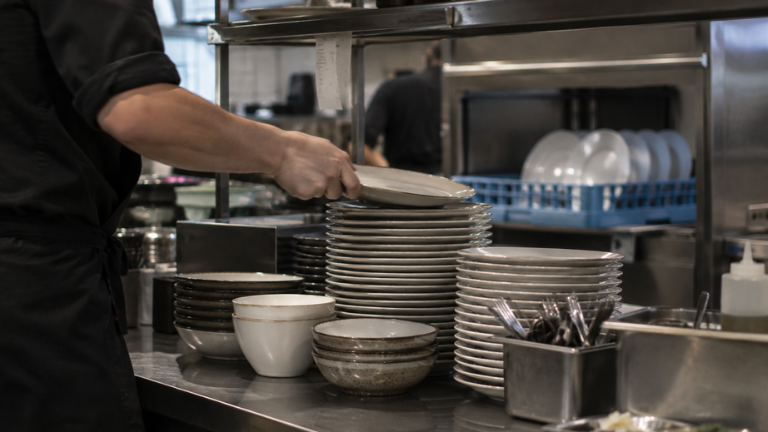
Choosing tableware for a hospitality business isn’t just a matter of aesthetics. Every plate, cup, or piece of cutlery is subjected to impacts, industrial wash cycles, and temperature changes several times a day. Using the wrong materials leads to constant breakage and costly replacements. Choosing the right materials, on the other hand, reduces costs over the entire lifespan of the collection.
Why the Material Determines the Lifespan of Tableware
In bars, restaurants, and hotels, tableware is subjected to frequent impacts, high temperatures, and intensive wash cycles. Not all materials hold up equally well: some retain their original appearance for years, while others chip or lose their luster within a few months. The right material not only reduces breakage but also maintains the establishment’s image and prevents service interruptions due to missing pieces.
More durable materials for professional use
Professional-grade porcelain: This is the standard material in the hospitality industry due to its low porosity and excellent performance in industrial dishwashers. Not all porcelain is suitable for professional use: it should combine a vitrified surface, mechanical strength, uniform thickness, and good tolerance to temperature changes.
Stoneware: It offers a more artisanal finish, with textures and tones that fit well with contemporary culinary concepts. On the other hand, it tends to be heavier, varies from batch to batch, and is somewhat less stackable than porcelain.
Professional-grade tableware: This is a more affordable and versatile option, but it’s a good idea to check its durability and the quality of the glaze before buying: a cheap set that chips frequently can end up costing more than a more durable, professional-grade alternative.
Melamine: It is highly resistant to impacts and drops, dishwasher-safe, and particularly well-suited for high-traffic settings, where the risk of impacts is greater. Tempered glass. It withstands thermal shock and intensive wash cycles better than conventional glass, making it suitable for everyday glassware.
What to Look for Beyond the Material
The durability of a piece depends not only on its thickness: the manufacturing process, shape, rim design, quality of the glaze, and how the piece is handled on a daily basis also play a role. Before deciding on a collection, it’s a good idea to consider several factors:
- Stackable design: Makes storage easier and reduces impact during handling.
- Uniform thickness: Prevents weak spots in the part’s structure.
- Compatibility with industrial dishwashers: This is essential to ensure that the tableware can withstand intensive cycles without losing its shine or decoration.
- Edge Reinforcement: The edges are the areas most exposed to impacts and chipping, so their durability deserves special attention.
The edges are, in fact, where much of the wear and tear occurs. Checking how a part holds up to normal wear and tear before buying in bulk helps avoid surprises later on.
The dishwasher also affects the product’s lifespan
Much of the breakage and wear and tear on dishes occurs in the dishwasher, not in the dining room. The most common problems include improper rack placement, overloading the machine, items bumping into each other, excessive detergent, inappropriate temperatures, or water that is too hard. Limescale buildup, in particular, causes mineral deposits and stains that affect both the dishes and the dishwasher itself. Proper loading and regular maintenance of the dishwasher minimize these issues and extend the lifespan of your entire set.
When to Remove a Part
An item should be inspected as soon as it shows cracks, sharp edges, chips, peeling decorations, surfaces that can no longer be cleaned properly, or any deformation. Keeping damaged items in circulation not only affects the service’s image—it can also pose a risk to the customer.
Replacement—a criterion that is often overlooked
Plates, cups, and cutlery don’t all break at once—they break gradually. If a collection is discontinued, a business may end up with an incomplete inventory and be forced to mix and match models or replace the entire collection prematurely. That’s why it’s a good idea to ask about the availability of individual pieces and the expected longevity of each item, beyond just the initial price.
How to Calculate the Actual Cost of a Set of Tableware
The purchase price is only part of the total cost. Over its useful life, tableware incurs costs related to replacement, transportation, storage, and handling in the dishwashing area. A slightly more expensive but durable collection is usually more cost-effective than a budget option that requires constant replacements: what matters is not the price per piece, but the cost per service over the years.
Beyond Tableware: What to Look for in Cutlery
Cutlery comes into direct contact with the customer, so its weight, balance, and finish are all part of the experience. For stainless steel, common designations roughly indicate the proportion of chromium and nickel in the alloy; a higher number alone does not guarantee superior quality, and it’s also important to evaluate the thickness, balance, and ease of cleaning. The knife deserves a separate discussion: its blade needs to retain its edge and resist warping, so it is usually made from a different alloy than the “
” used for forks and spoons.
Conclusion
The best tableware for a hospitality business isn’t the cheapest or the most decorative, but rather the kind that combines durability under heavy use, compatibility with industrial dishwashers, good stackability, and long-term availability of replacement pieces. Evaluating these factors from the start prevents last-minute surprises and keeps costs under control throughout the business’s lifespan. At Pilsa, we help bars, restaurants, and hotels choose the tableware that best fits their service volume and dishwashing equipment.
Discover our selection of durable professional tableware for the hospitality industry: www.pilsa.com/3-vajillas.